
UKJT Publishes Landmark Legal Statement on Liability for AI Harms
The UK Jurisdiction Taskforce (UKJT) has published its Legal Statement on Liability for AI Harms under the Private Law of England and Wales, providing significant guidance on how existing English law applies to harms arising from the use of artificial intelligence.
The UK Jurisdiction Taskforce (UKJT) has published its Legal Statement on Liability for AI Harms under the Private Law of England and Wales, providing significant guidance on how existing English law applies to harms arising from the use of artificial intelligence.
As AI becomes increasingly embedded across professional services, commerce and everyday decision-making, questions surrounding legal responsibility have moved rapidly from theoretical discussion to practical concern. The Legal Statement addresses these issues by examining how established principles of contract, negligence, professional liability, product liability and defamation apply when AI systems cause harm, while also identifying areas where future legislative clarification may be required.
One of the Statement's central conclusions is that the common law of England and Wales is sufficiently flexible to respond to many AI-related disputes without requiring an entirely new legal framework. At the same time, it recognises that emerging technologies continue to raise novel questions that will require further judicial and legislative development as AI capabilities evolve.
The publication will be of particular interest to legal practitioners, businesses, technology developers, insurers and academics seeking greater certainty around liability risks associated with AI deployment. It also represents another important milestone in the UK's broader efforts to position English law as a trusted jurisdiction for technological innovation and digital dispute resolution.
You can access the full Legal Statement here:

Future Disputes UK: Innovation & Technology in Dispute Resolution
How is technology reshaping the future of disputes?
From artificial intelligence and predictive analytics to online dispute resolution and digital hearings, legal technology is transforming how disputes are managed, argued and resolved. Future Disputes UK brings together leading litigators, arbitrators, legal technologists and disputes professionals to explore the innovations redefining modern dispute resolution.
How is technology reshaping the future of disputes?
From artificial intelligence and predictive analytics to online dispute resolution and digital hearings, legal technology is transforming how disputes are managed, argued and resolved. Future Disputes UK brings together leading litigators, arbitrators, legal technologists and disputes professionals to explore the innovations redefining modern dispute resolution.
Taking place on 17 September 2026 in London, the conference will examine some of the most significant developments affecting practitioners today, including:
Artificial intelligence in disputes practice
Predictive analytics and legal decision-making
E-disclosure and digital evidence
Online dispute resolution (ODR)
Digital hearings and emerging technologies
The future of dispute resolution practice
As a Media Partner, ArbTech is proud to support this event and help foster conversations at the intersection of law, technology and innovation.
Complimentary passes for the ArbTech community
We're delighted to offer complimentary access to legal professionals within the ArbTech network.
Places are available on a first-come, first-served basis. If you would like to attend, please email hello@arbtech.io with your details and our team will be in touch.
Find out more about Future Disputes UK and view the full programme on the event website.

15th Anniversary Edition: Fraud, Asset Tracing & Recovery Miami
How are practitioners staying ahead of increasingly sophisticated fraud, cross-border asset recovery and global enforcement challenges?
Celebrating its 15th Anniversary, Fraud, Asset Tracing & Recovery Miami returns this October, bringing together leading lawyers, judges, investigators, forensic experts, insolvency practitioners and asset recovery specialists from around the world for two days of practical insight, strategic discussion and international networking.
How are practitioners staying ahead of increasingly sophisticated fraud, cross-border asset recovery and global enforcement challenges?
Celebrating its 15th Anniversary, Fraud, Asset Tracing & Recovery Miami returns this October, bringing together leading lawyers, judges, investigators, forensic experts, insolvency practitioners and asset recovery specialists from around the world for two days of practical insight, strategic discussion and international networking.
The programme explores many of the most pressing issues shaping cross-border disputes and asset recovery, including:
International fraud investigations
Asset tracing and recovery strategies
Cross-border enforcement
Insolvency and restructuring
Emerging technologies and investigative tools
Global developments in dispute resolution
New for 2026, the conference introduces Next Gen Nexus—a dedicated programme designed to support the next generation of asset recovery professionals through tailored sessions and networking opportunities. Special pricing is available for lawyers with fewer than ten years of practice.
As an Event Partner, ArbTech is pleased to share an exclusive discount for our community.
Exclusive ArbTech Member Offer
ArbTech members can save 10% on registration using the code:
D10-999-ARBTECH27
The conference takes place on 29–30 October 2026 at the Grand Beach Hotel Surfside, Miami, providing an opportunity to connect with experts from across the global disputes and investigations community.
Find out more and register via the event website.
AI-Assisted Awards and the New York Convention: A Debate on the Future of Enforcement
Can an arbitral award remain enforceable if artificial intelligence played a significant role in drafting—or even shaping—the decision? As AI becomes increasingly integrated into arbitration, this question is rapidly moving from academic debate to practical reality?
13 Jul
Can an arbitral award remain enforceable if artificial intelligence played a significant role in drafting—or even shaping—the decision? As AI becomes increasingly integrated into arbitration, this question is rapidly moving from academic debate to practical reality.
A new debate published on the Kluwer Arbitration Blog brings together Federico Ast, Sophie Nappert and Pietro Ortolani to examine how the 1958 New York Convention may apply to AI-assisted arbitral awards and whether its existing framework is equipped to address this new generation of technology.
The discussion comes at a particularly significant moment. AI-assisted arbitration tools are beginning to emerge, and courts are already considering cases involving AI-generated errors in judicial decision-making. As these technologies become more sophisticated, questions surrounding enforceability, procedural integrity and human oversight are likely to become increasingly important.
The debate explores several fundamental questions, including:
Whether an arbitral award must ultimately be the product of human judgment.
How much AI assistance is compatible with an arbitrator's personal mandate.
Whether AI-generated reasoning could affect the validity or enforceability of an award.
How existing disclosure and challenge mechanisms apply to algorithmic bias.
Whether parties can consent to AI-assisted decision-making without compromising enforcement.
Whether the New York Convention itself remains sufficiently flexible to accommodate these developments.
Despite offering differing perspectives, the contributors broadly agree that the New York Convention remains remarkably resilient. Rather than requiring amendments to the Convention itself, they suggest that future practice should focus on clearer guidance surrounding transparency, human oversight, procedural safeguards and responsible AI governance.
The debate also raises broader questions about the future of dispute resolution: as AI becomes more capable of supporting legal reasoning, how should arbitration balance technological innovation with the principles of procedural fairness, party autonomy and the rule of law?
This timely discussion provides valuable insight into one of the most important emerging issues facing international arbitration and legal technology.
Read the full debate to explore how leading practitioners and academics believe AI may reshape the enforcement of arbitral awards under the New York Convention.
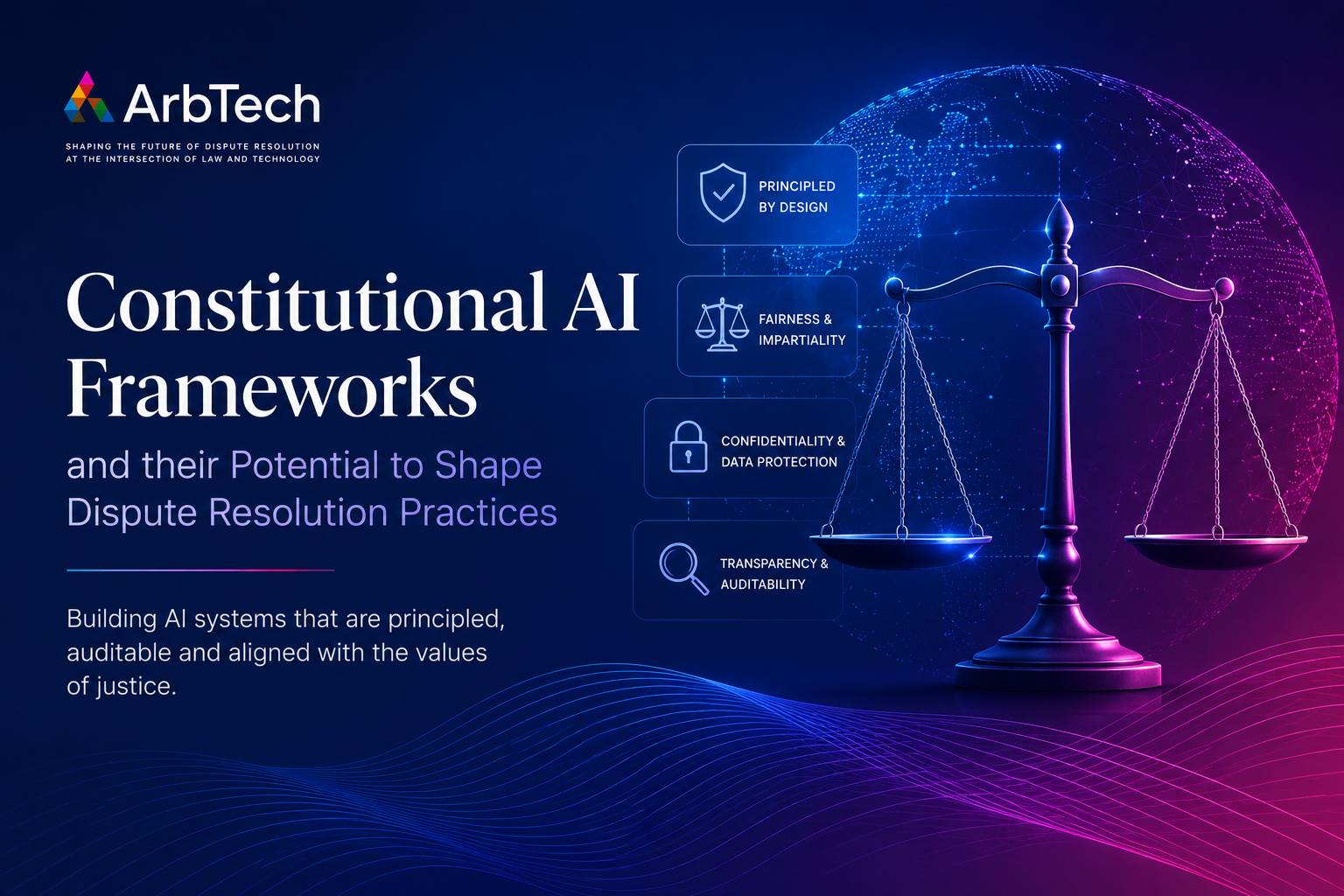
Constitutional AI Frameworks: A New Frontier for Ethical AI in Dispute Resolution
Can AI be designed to reason more like a principled decision-maker rather than simply a powerful prediction engine? A new paper by Fernanda Dias and Sophie Nappert explores how Constitutional AI (CAI) and Constitutional Classifiers (CCs) could help shape the future of dispute resolution by embedding legal and ethical principles directly into AI systems.
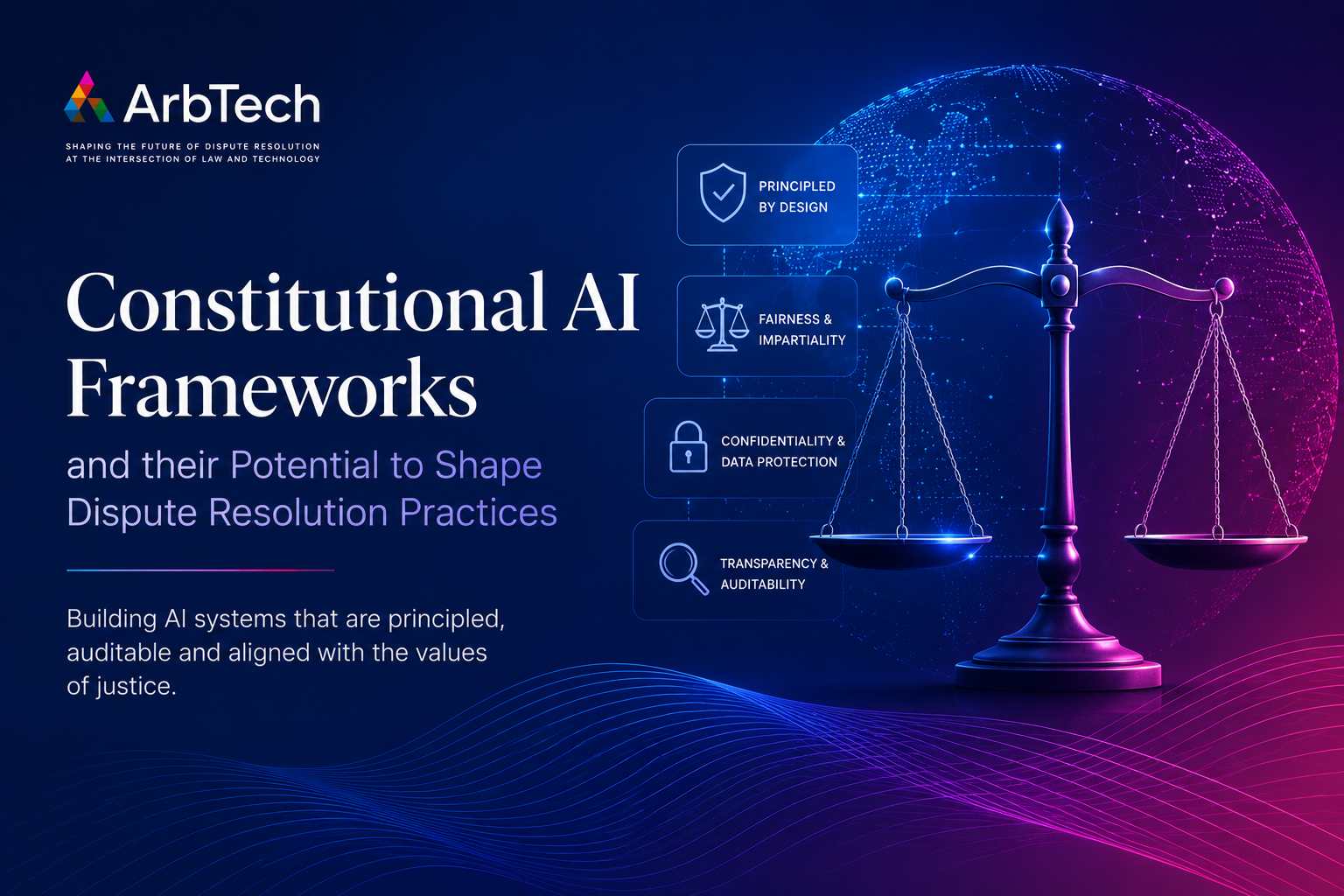
Can AI be designed to reason more like a principled decision-maker rather than simply a powerful prediction engine? A new paper by Fernanda Dias and Sophie Nappert explores how Constitutional AI (CAI) and Constitutional Classifiers (CCs) could help shape the future of dispute resolution by embedding legal and ethical principles directly into AI systems.
As artificial intelligence becomes increasingly integrated into legal practice, the conversation is shifting from whether AI should be used to how it can be deployed responsibly. While AI offers significant opportunities to improve efficiency, reduce costs and enhance access to justice, it also raises fundamental questions about fairness, transparency and accountability.
The paper examines Constitutional AI (CAI), an approach pioneered by Anthropic that trains AI models using a "constitution" of natural-language principles rather than relying solely on human feedback. Instead of merely filtering problematic outputs after they are generated, Constitutional AI encourages models to critique and revise their own reasoning in line with values such as impartiality, due process, confidentiality and fairness.
Alongside CAI, the authors discuss Constitutional Classifiers (CCs), which provide an additional layer of protection by monitoring both user inputs and AI outputs in real time. These classifiers are designed to prevent harmful or inappropriate content before it reaches users, strengthening the overall reliability and safety of AI systems.
The paper explores how these technologies could be applied across dispute resolution, particularly in international arbitration. Potential applications include:
Producing balanced evidence summaries without drawing premature legal conclusions.
Assisting with procedural management while respecting party autonomy.
Protecting confidential information and privileged communications.
Supporting consistency across jurisdictions by embedding institutional rules and procedural standards.
Enhancing transparency by making AI reasoning more explainable and auditable.
Beyond the technical aspects, the authors also consider broader governance questions. As constitutional approaches are developed by private technology companies, they ask how these underlying principles can become publicly accountable, independently auditable and suitable for use within judicial and governmental systems.
Rather than presenting Constitutional AI as a complete solution, the paper argues that these emerging frameworks offer a promising direction for developing AI tools that better reflect the values underpinning dispute resolution. As AI continues to reshape legal practice, constitutional approaches may help bridge the gap between technological innovation and procedural justice.
Read the full paper to explore how Constitutional AI could help build more transparent, trustworthy and ethically aligned AI systems for dispute resolution.

TEDx Grenoble: Why the Distinction Between "Online" and "Offline" No Longer Makes Sense
In a recent TEDx talk at Grenoble School of Management, Sébastien Martin, CEO of ArbTech's featured Startup Spotlight company RaidSquare , challenges one of the most persistent assumptions of the digital age: that the online world and the physical world are separate places.
Sébastien Martin, CEO of RaidSquare, explores why our traditional understanding of the digital world is becoming obsolete.
In a recent TEDx talk at Grenoble School of Management, Sébastien Martin, CEO of ArbTech's featured Startup Spotlight company RaidSquare , challenges one of the most persistent assumptions of the digital age: that the online world and the physical world are separate places.
For decades, this distinction seemed obvious. The physical world consisted of offices, factories, shops, infrastructure and people. The digital world consisted of websites, software, databases and networks. Problems in one world often stayed in that world.
Today, that separation no longer reflects reality.
Sébastien explains that software increasingly controls physical systems. Cars have become computers on wheels. Factories run on connected software. Logistics networks are coordinated by algorithms. Healthcare, payments and critical infrastructure all depend on digital systems operating continuously in the background.
A software failure can stop a production line. A cyberattack can disrupt transportation networks. A cloud outage can affect physical operations across multiple countries.
At the same time, physical reality is becoming increasingly represented through data. Nearly every human activity creates a digital footprint—from movement and communication to purchasing decisions and travel patterns. The digital representation of individuals, businesses and institutions is becoming almost as influential as the physical entities themselves.
Online reputation can affect careers. Digital reviews shape customer behaviour. GPS systems influence traffic flows. Social media can alter real-world events within hours.
Sébastien posits that the challenge is that human thinking has not fully adapted to this shift. We still speak about "real life" and "online life" as though they are separate experiences, when in fact actions continuously flow between the physical and digital environments.
A post on social media can influence public perception. Public perception affects purchasing decisions. Purchasing decisions affect revenue. Revenue affects hiring and investment. A digital action can create tangible physical consequences, just as physical events can rapidly generate digital effects that spread globally.
The implications extend beyond technology. They affect how organisations think about cybersecurity, governance, digital transformation, risk management and innovation.
In his talk, Sébastien argues that the organisations best positioned for the future will be those that stop treating digital as a separate function and instead design around a fully integrated physical-digital reality.
As digital systems become embedded in every aspect of society, hybrid thinking is no longer optional—it has become essential.
Watch the full TEDx talk by Sébastien Martin below.

ArbTech Partners with LegalTechTalk 2026
ArbTech is pleased to announce its media partnership with LegalTechTalk 2026, Europe’s event for legal transformation.
Media Partnership
ArbTech is pleased to announce its media partnership with LegalTechTalk 2026, Europe’s event for legal transformation.
Taking place on 17–18 June 2026 at InterContinental London – The O2, LegalTechTalk brings together more than 5,500 attendees from over 75 countries, alongside 400+ speakers and legal innovation leaders from across the global legal ecosystem.
The event explores the technologies, ideas and collaborations shaping the future of law, from AI and legal operations to digital transformation, innovation strategy and the changing role of legal professionals.
As a platform dedicated to the intersection of law, technology, dispute resolution and the future of justice, ArbTech is proud to support LegalTechTalk’s mission to foster meaningful conversations across the legal sector.
We look forward to following and contributing to the discussions taking place in London as practitioners, institutions, founders, technologists and legal leaders come together to explore the next chapter of legal transformation.


Celebrating Five Years of ArbTech
Over the past five years, ArbTech has grown into a global platform exploring how emerging technologies are reshaping legal systems, arbitration, and the future of dispute resolution.
What started as a space for cross-disciplinary dialogue has evolved into a widely followed knowledge platform featuring practitioners, academics, technologists, founders, institutions, and policymakers from around the world.

Over the past five years, ArbTech has grown into a global platform exploring how emerging technologies are reshaping legal systems, arbitration, and the future of dispute resolution.
What started as a space for cross-disciplinary dialogue has evolved into a widely followed knowledge platform featuring practitioners, academics, technologists, founders, institutions, and policymakers from around the world.
Through its articles, podcast discussions, collaborations, events, and deep-dive guides, ArbTech has explored topics including:
• AI in arbitration and legal practice
• Digital assets, blockchain disputes, and smart contracts
• DAOs, DeFi governance, and Web3 disputes
• Constitutional and agentic AI
• Ethics, governance, and regulation of legal AI
• AI-assisted decision-making and due process
• Online dispute resolution and legal system design
• NFTs, tokenisation, crypto tracing, and cybersecurity
Over the years, ArbTech has published a growing library of practitioner-focused resources, including its widely referenced guides on and, alongside commentary on emerging developments shaping dispute resolution globally.
The platform has also become known for spotlighting conversations that sit slightly ahead of the curve — from the practical implications of generative AI in arbitration to questions surrounding transparency, explainability, bias, and human oversight in legal AI systems.
In addition to publishing, ArbTech has actively contributed to innovation initiatives across the legal sector.
In 2024, ArbTech co-organised the first-ever arbitration hackathon alongside Jus Mundi, co-hosted by ICC UK and Simmons & Simmons in London. In 2025, this continued through collaborations including the AAA / Wolters Kluwer Hackathon in The Hague and the OxAI Hackathon at Pembroke College, University of Oxford.
The launch of in 2025 also marked an important step in supporting emerging legal technology providers building practical tools for lawyers, arbitrators, and institutions.
Alongside this, ArbTech’s podcast series ‘Disputes Decoded’ has featured discussions with leading voices across arbitration, AI, blockchain governance, legal innovation, and online dispute resolution — helping make complex developments more accessible to a wider audience.
As technology continues to transform the legal profession, ArbTech remains focused on creating a space for informed discussion, collaboration, and forward-looking analysis.
Sir Geoffrey Vos MR on AI and the Future of Legal Practice
At the recent Association of Law Teachers’ conference, Sir Geoffrey Vos MR delivered a timely address on how artificial intelligence is reshaping the legal profession - offering both reassurance and a clear call to adapt.
At the recent Association of Law Teachers’ conference, Sir Geoffrey Vos MR delivered a timely address on how artificial intelligence is reshaping the legal profession - offering both reassurance and a clear call to adapt.
In his speech (available in full here), Sir Geoffrey emphasized that lawyers are not becoming obsolete in the age of AI. On the contrary, their role may become even more important. However, what clients expect from lawyers is already shifting.
With AI tools providing widespread access to legal information, clients are increasingly arriving with pre-formed views on their legal position. The value of lawyers, therefore, lies less in delivering initial answers and more in interpreting, validating, and applying those insights in real-world contexts.
The speech also highlights a broader transformation across the legal sector:
AI is expected to play a growing role in areas such as claims assessment and legal research
Courts are already seeing an increase in AI-assisted submissions
Law firms are adapting recruitment strategies to prioritize both technical fluency and client-facing skills
Importantly, Sir Geoffrey underscored that human judgement remains central—particularly in the development of legal principles and the evolution of the law in response to societal change.
These themes closely align with ongoing discussions across ArbTech.io, where we continue to explore the intersection of AI, dispute resolution, and the future of legal systems.
For those following developments in legal technology and arbitration, this provides valuable insight into how one of the UK’s most senior judges views the road ahead.

UKJT Publishes Landmark Report on Control of Digital Assets
The UK Jurisdiction Taskforce (UKJT) has published its latest report on the control of digital assets, offering timely and much-needed guidance on how English law approaches one of the most complex questions in digital asset jurisprudence.
The UK Jurisdiction Taskforce (UKJT) has published its latest report on the control of digital assets, offering timely and much-needed guidance on how English law approaches one of the most complex questions in digital asset jurisprudence.
As digital assets continue to play an increasingly central role in modern finance and commerce, questions around control, ownership, and legal characterisation have become critical. The report builds on earlier UKJT work and contributes to the broader effort—also reflected in recent Law Commission proposals—to clarify the legal status of digital assets, including the recognition of a potential third category of personal property.
The report will be of particular interest to practitioners, academics, and market participants navigating issues such as custody, transfer, and enforcement in relation to cryptoassets and other digital assets.
You can access the full report here: Report on Control of Digital Assets - LawtechUK
Code & Law Hackathon: Where Legal Innovation Met Artificial Intelligence
Pembroke College, Oxford, became a vibrant centre of creativity and experimentation during the Code & Law Hackathon, an intensive one-day event exploring how artificial intelligence can meaningfully improve access to justice and dispute resolution.
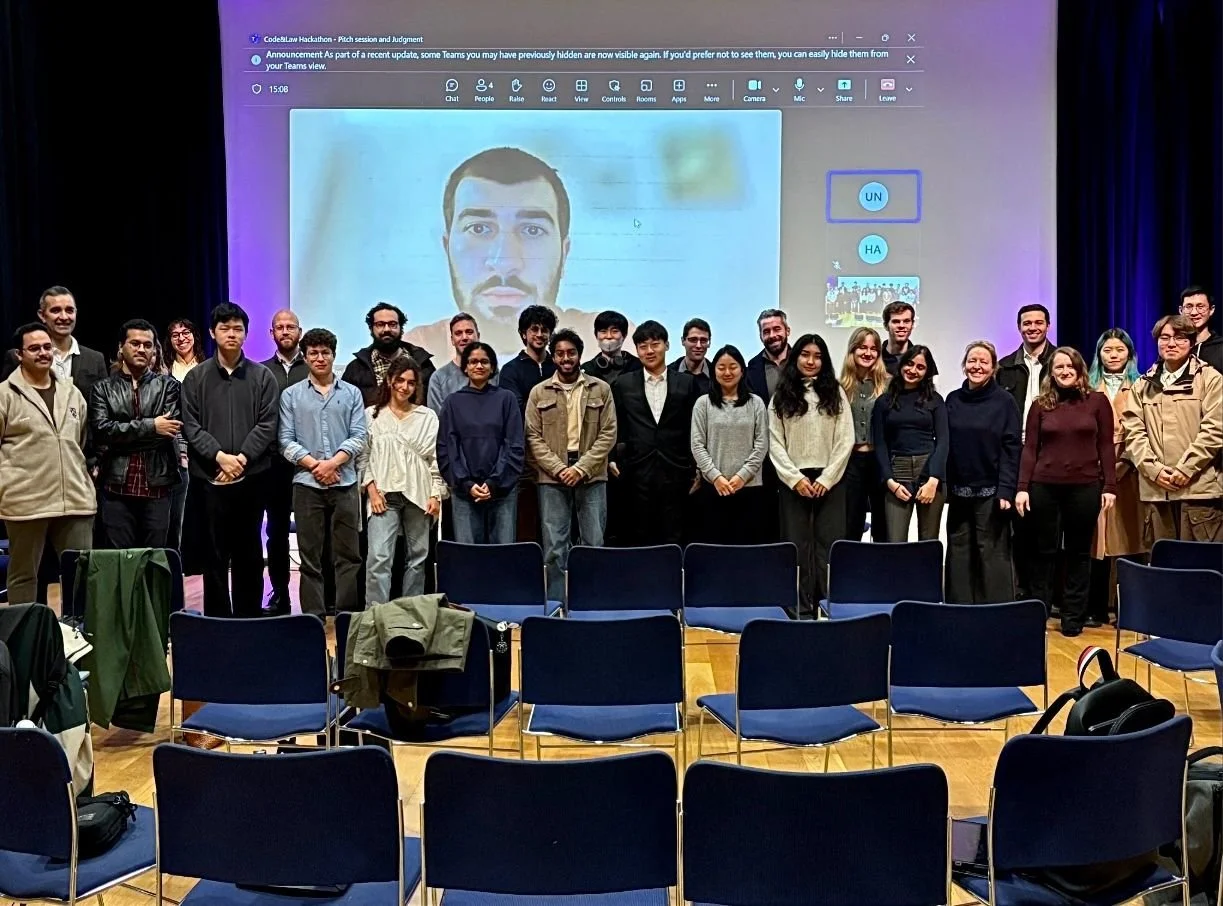
Pembroke College, Oxford, became a vibrant centre of creativity and experimentation during the Code & Law Hackathon, an intensive one-day event exploring how artificial intelligence can meaningfully improve access to justice and dispute resolution.
The hackathon was co-hosted by ArbTech.io, the Oxford Artificial Intelligence Society (OxAI), and the Oxbridge AI Challenge & Oxbridge AI X, in partnership with Lovable and the Singapore Global Network (SGN). Together, these organisations created a unique environment where lawyers, technologists, researchers, and innovators worked side by side to reimagine legal processes through AI.
From Ideas to Working Prototypes — in One Day
What made the Code & Law Hackathon particularly striking was the pace and depth of progress. Over the course of a single day, participants moved from early concepts to fully functional prototypes, using Lovable AI as their primary development tool.
Teams tackled complex and timely challenges, including:
Early-stage case assessment tools to help users understand disputes sooner
Negotiation support systems designed to reduce friction and escalation
User-centric legal workflows focused on clarity, accessibility, and efficiency
The results demonstrated not only technical skill, but also a strong understanding of real-world legal pain points — showing how interdisciplinary collaboration can unlock practical, forward-looking solutions.
Insights from Leaders in Law and Legal Innovation
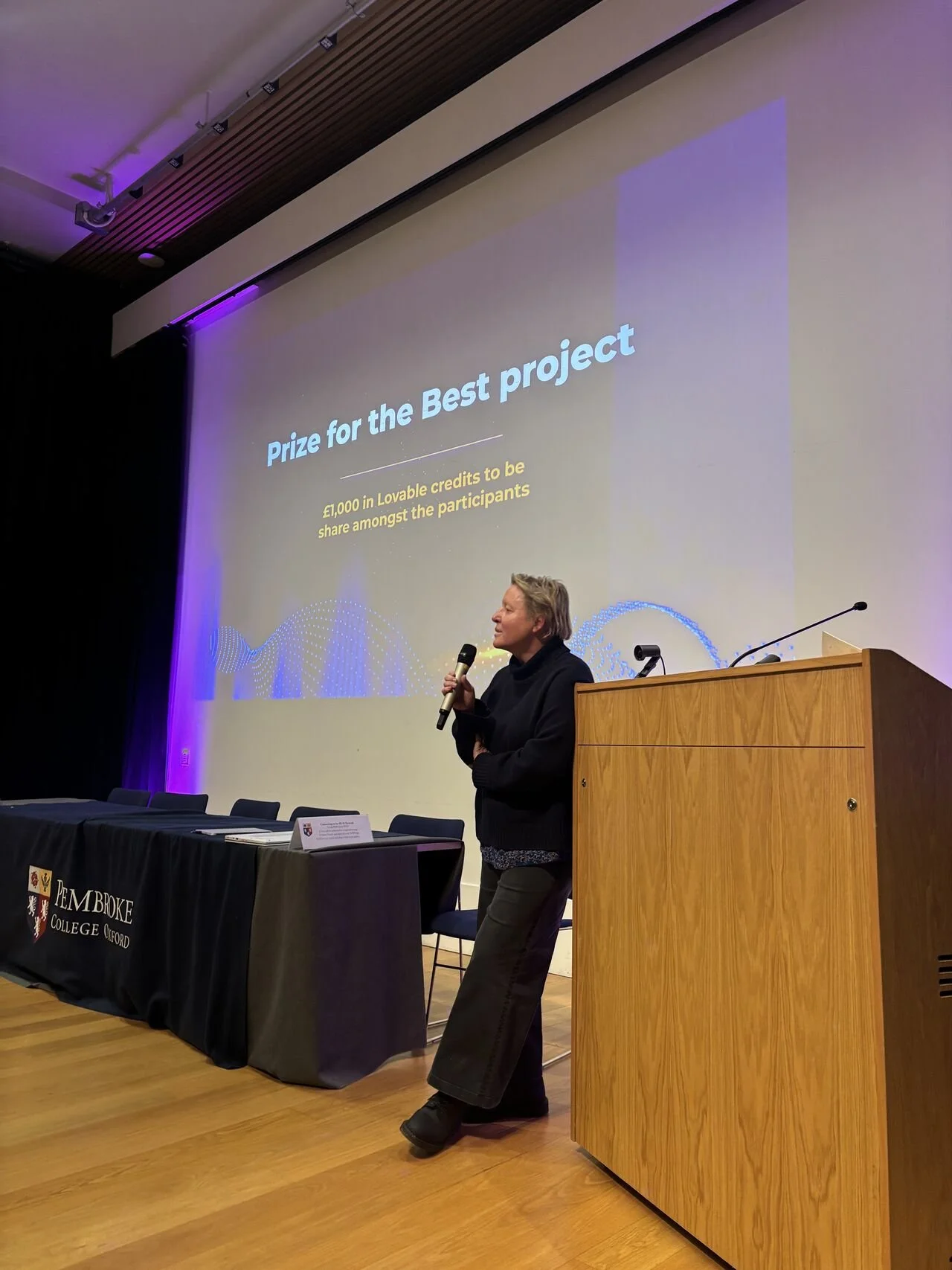
The day was further enriched by keynote talks from two highly respected voices in the field:
Sir Ernest Ryder, former Senior President of Tribunals, shared insights on modernising justice systems and the structural challenges facing dispute resolution today.
Lado Sirdadze, a leading expert in legal technology and innovation, spoke about the urgent need for genuine knowledge exchange between computer scientists and legal professionals in order to build tools that truly work in practice.
Together, their perspectives set the tone for the event: innovation in law requires not just technology, but deep collaboration across disciplines.
Expert Judging with a Focus on Real-World Impact
The judging panel brought exceptional breadth and depth of expertise:
Sophie Nappert, internationally recognised arbitrator, contributed deep insight into dispute resolution practice.
Mihaela Apostol, legal technology specialist, focused on feasibility and implementation.
Lado Sirdadze, drawing on his experience at the intersection of law and AI.
Udai Dhamija, expert in digital transformation, evaluated scalability and long-term impact.
Their feedback helped ensure that the solutions were not only innovative, but also viable, ethical, and relevant to real legal systems.
Congratulations to the Winning Team
The competition concluded with a well-deserved win for Team Truce AI, composed of Matthew Christensen, Wilhelm Lorenz Bühner, Malika Nakisbekova, and Jun Yang. Their solution stood out for its thoughtful approach to dispute resolution and its strong potential for practical adoption.
Building the Future of Law, Together
The Code & Law Hackathon was a powerful demonstration of what becomes possible when law and technology converge in a spirit of experimentation, openness, and collaboration. It highlighted a growing movement — one focused not on abstract promises of AI, but on building tangible tools that can improve how justice is accessed and delivered.
ArbTech is proud to collaborate with partners and communities that are actively shaping the future of dispute resolution and legal innovation.

ArbTech Highlights: Launch of the BLF Specialist Arbitrator List for Blockchain Disputes
The Blockchain Lawyers Forum (BLF), the largest global network of Web3 legal practitioners, has announced the launch of a Specialist Arbitrator List—a valuable new resource for resolving blockchain and crypto-related disputes.
Curated by Dr. Nino Sievi and Sophie Nappert, this independent list brings together experienced arbitrators with both a strong arbitration background and deep knowledge of blockchain technology and the crypto industry. With disputes in the digital asset sector becoming more frequent and more complex, the initiative answers a clear market need: access to neutrals who understand not just arbitration procedure but also the technical and commercial realities of Web3.
The Blockchain Lawyers Forum (BLF), the largest global network of Web3 legal practitioners, has announced the launch of a Specialist Arbitrator List—a valuable new resource for resolving blockchain and crypto-related disputes.
Curated by Dr. Nino Sievi and Sophie Nappert, this independent list brings together experienced arbitrators with both a strong arbitration background and deep knowledge of blockchain technology and the crypto industry. With disputes in the digital asset sector becoming more frequent and more complex, the initiative answers a clear market need: access to neutrals who understand not just arbitration procedure but also the technical and commercial realities of Web3.
“The BLF Arbitrator List is a timely and necessary initiative. As blockchain and crypto-related disputes become more complex, parties need arbitrators who not only understand arbitration but also grasp the unique features of this evolving technology.”
Why this matters for arbitration
Independent and impartial – The BLF list is not tied to any arbitral institution, ensuring neutrality in the selection process.
Expert-driven – Inclusion requires demonstrable expertise, such as case experience, academic contributions, or other recognized work in blockchain and arbitration.
Growing roster – Already, more than 35 arbitrators are part of the list, creating one of the first global hubs of its kind.
Accessing the BLF Arbitrator List
At ArbTech, we continue to track and spotlight innovations like this that shape the future of arbitration in the blockchain era. As disputes involving smart contracts, DeFi, NFTs, and crypto-assets grow, initiatives such as the BLF Arbitrator List will help ensure fair, informed, and effective dispute resolution.
Access the BLF Arbitrator List.
For more on blockchain and dispute resolution, explore:
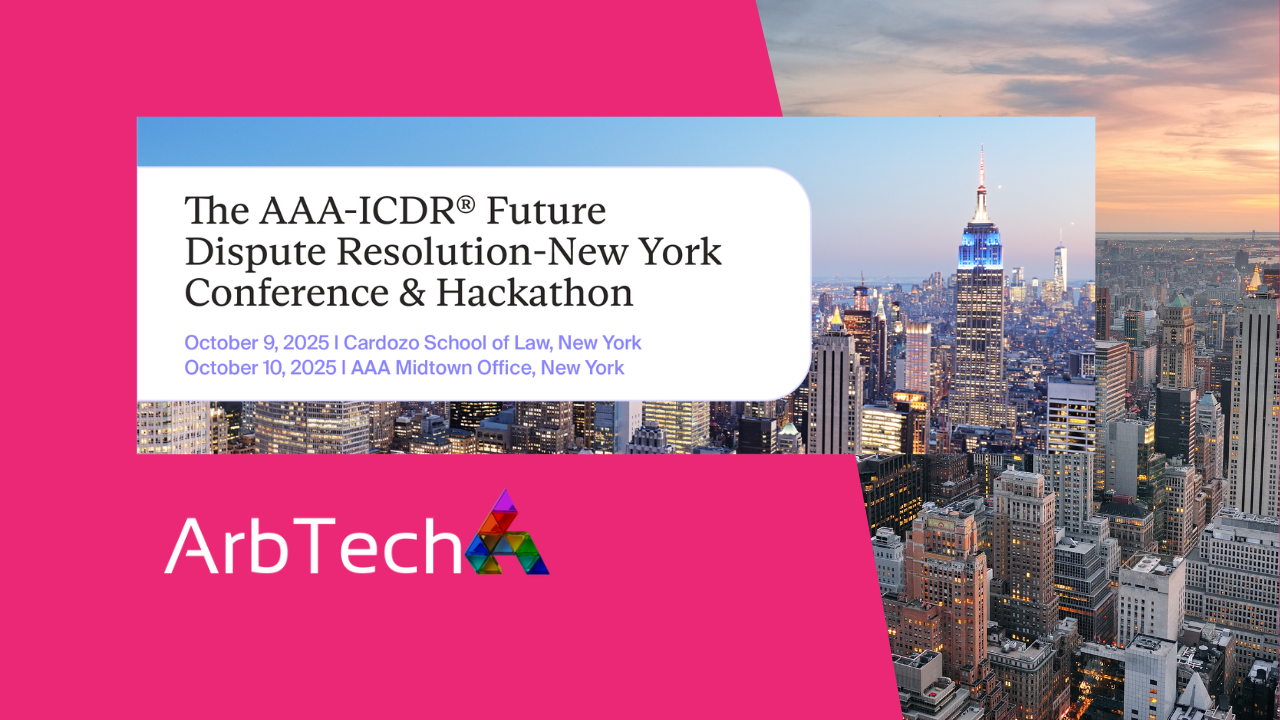
ArbTech Named Media Partner for 2025 Future of Dispute Resolution Hackathon
We’re excited to announce that ArbTech is an official media partner for the 2025 Future of Dispute Resolution Hackathon, hosted by the American Arbitration Association–International Centre for Dispute Resolution® (AAA-ICDR).
We’re excited to announce that ArbTech is an official media partner for the 2025 Future of Dispute Resolution Hackathon, hosted by the American Arbitration Association–International Centre for Dispute Resolution® (AAA-ICDR).
Following the success of the event in The Hague, AAA-ICDR will host the next Future Dispute Resolution event in New York City on October 9–10, 2025.
This dynamic, fast-paced event brings together dispute resolution professionals, technologists, and innovators from around the globe to tackle real-world challenges at the intersection of ADR and emerging technologies. Participants will form cross-disciplinary teams to prototype solutions that could reshape the future of arbitration, mediation, and negotiation.
As a media partner, ArbTech will be covering key moments from the hackathon—highlighting standout ideas, sharing insights from participants, and exploring how innovation can drive fairness, accessibility, and efficiency in dispute resolution.
When: 9-10 October, 2025
Where: New York City
Learn more and register on the official event page.

New on Kluwer: Exploring Constitutional AI in International Arbitration
We’re proud to announce that ArbTech’s latest thought piece has been published on Kluwer Arbitration Blog — one of the world’s leading platforms for international arbitration commentary.
In this article, our moderators Sophie Nappert, Benjamin Malek, and newest ArbTech moderator, Fernanda Carvalho Dias de Oliveira Silva, explore how Constitutional AI can reshape the way we engage with large language models (LLMs) in international arbitration.
Plus: A Call for Papers from the ArbTech Community
Published in collaboration with Kluwer Arbitration Blog
By Sophie Nappert, Benjamin Malek, and Fernanda Carvalho Dias de Oliveira Silva
We’re proud to announce that ArbTech’s latest thought piece has been published on Kluwer Arbitration Blog — one of the world’s leading platforms for international arbitration commentary.
In this article, our moderators Sophie Nappert, Benjamin Malek, and newest ArbTech moderator, Fernanda Carvalho Dias de Oliveira Silva, explore how Constitutional AI can reshape the way we engage with large language models (LLMs) in international arbitration.
Read the full article here:
What is Constitutional AI and Why Does it Matter for International Arbitration?
About the Article
As arbitration professionals adopt generative AI, how we integrate it becomes just as important as why. This piece unpacks the idea of Constitutional AI—AI models trained with internalized ethical and governance principles—and explores:
How it aligns with core arbitral values like impartiality and due process
What risks it addresses (hallucination, bias, opacity)
How practitioners can incorporate AI responsibly in case management and decision-making
It’s a must-read for anyone navigating the intersection of technology, fairness, and international dispute resolution.
Why This Collaboration Matters
At ArbTech, we believe innovation in arbitration needs an ecosystem—not just a platform.
Our collaboration with Kluwer reflects a shared mission: to explore and shape the future of dispute resolution with integrity, inclusion, and innovation. This article is just the beginning of a broader effort to foster dialogue across institutions, practitioners, academics, and developers alike.
Call for Papers
Are you exploring questions like:
How should tribunals handle AI-generated evidence?
What disclosure duties arise when AI tools are used in drafting?
Can generative AI assist in procedural efficiency while preserving party autonomy?
Interested contributors should submit a 400-word proposal (original, non-AI-generated) to aiandarbitration@outlook.com. We look forward to your ideas as we shape the future of arbitration in the age of AI.

Inside the Hague Hackathon: Co-Creating the Future of Dispute Resolution
Watch the highlight reel from the recent hackathon in The Hague — hosted by Wolters Kluwer and the American Arbitration Association–International Centre for Dispute Resolution (AAA-ICDR) — where innovation met intention. This ground-breaking event brought together engineers, legal professionals, and UX designers to collaboratively reimagine how AI can optimize the arbitration and mediation process.
Hosted by Wolters Kluwer and the American Arbitration Association–International Centre for Dispute Resolution (AAA-ICDR)
Featuring Sophie Nappert, ArbTech co-founder and Elisabeth Zoe Everson, ArbTech Moderator
What happens when you bring together top legal minds, software engineers, and designers for a single mission: to make dispute resolution smarter, faster, and more human?
Watch the highlight reel from the recent hackathon in The Hague — hosted by Wolters Kluwer and the American Arbitration Association–International Centre for Dispute Resolution (AAA-ICDR) — where innovation met intention. This ground-breaking event brought together engineers, legal professionals, and UX designers to collaboratively reimagine how AI can optimize the arbitration and mediation process.

From sticky notes to smart systems, we witnessed the spark of real transformation — not just theory, but cross-disciplinary teams prototyping practical solutions in real time.
Featuring insights from Sophie Nappert, international arbitrator and faculty member of Future Dispute Resolution 2025, the event set the tone for what AI-powered collaboration can look like in legal practice.
Watch the videos to experience the energy, creativity, and shared vision.
Following the success of this event, AAA-ICDR will host the next Future Dispute Resolution event in New York City on October 9–10, 2025.

The AAA-ICDR’s® Future Dispute Resolution Conference
We’re proud to collaborate with the AAA-ICDR for the 2025 Future of Dispute Resolution Conference-an influential global forum driving innovation and shaping the future of alternative dispute resolution.

We’re proud to collaborate with the AAA-ICDR for the 2025 Future of Dispute Resolution Conference—
an influential global forum driving innovation and shaping the future of alternative dispute resolution.
This full-day event brings together leading voices in arbitration, mediation, and legal tech to explore
how AI and emerging technologies are reshaping the future of dispute resolution. From digital
arbitrators to ethical frameworks and breakthrough process design, it’s a must-attend for anyone
shaping the next era of ADR.

Designing the Future of Justice: ArbTech at King’s College London Hackathon
Earlier this year, ArbTech had the privilege of participating in a groundbreaking event at King’s College London, co-hosted by the King’s Institute for Artificial Intelligence and Kleros. The full-day conference explored how cutting-edge technologies like AI, blockchain, and mechanism design are transforming the future of dispute resolution—and we were thrilled to be a part of it.
On 23-24 April 2025, ArbTech participated in a groundbreaking event at King’s College London, co-hosted by the King’s Institute for Artificial Intelligence and Kleros, the pioneering blockchain dispute resolution application. The two-day event explored how cutting-edge technologies like AI, blockchain, and mechanism design are transforming the future of dispute resolution—and we were thrilled to be a part of it.
The event brought together academics, legal technologists, blockchain developers, and founders to explore practical applications of decentralized justice. Through talks, panels, and hands-on collaboration, participants dug into emerging frameworks for peer prediction, blockchain-based identity, and AI-driven judicial tools.
The hackathon took place on 23 April 2025 and challenged teams to design innovative business ideas at the intersection of law, AI, and blockchain. Using the Lean Canvas framework, teams worked on rapid ideation, customer discovery, interface prototyping, and even meme creation—all to pitch the next wave of decentralized legaltech solutions.

Picture with the leaders of the Hackathon. From the left: William George, Federico Ast, Robert Dean, Sophie Nappert.
Inspired by the Kleros model—where jurors are economically incentivized to vote honestly via cryptographic tokens—participants explored new ways to reimagine fairness, speed, and transparency in digital dispute resolution. The hackathon highlighted how traditional legal bottlenecks (high costs, long timelines, and opacity) can be tackled through smart contracts and collaborative design.
Key takeaways from the day:
Mechanism design isn’t just theoretical—it’s a powerful tool for justice when paired with real-world use cases.
Users will stay loyal to platforms that resolve disputes quickly and fairly—even when outcomes aren’t in their favor.
Open, programmable courts built on blockchain could offer credible alternatives to small claims processes and online consumer disputes.
AI isn’t replacing lawyers—but it’s helping build new layers of justice infrastructure.
The event showcased what’s possible when communities like ArbTech, Kleros, and academic partners come together to rethink justice from the ground up.
Want to learn more about how we’re contributing to the future of decentralized dispute resolution? Stay tuned and reach out—we’re just getting started.

LIDW25: Innovation in Dispute Resolution: Navigating Global Risks.
ArbTech is pleased to announce that we are a proud supporter of London International Disputes Week, in the lead up to LIDW25 taking place from 2nd - 6th June. For 2025, the theme for LIDW is ‘Innovation in Dispute Resolution: Navigating Global Risks.’ The main conference will be taking place on Tuesday 6th June at the QEII Centre, as part of a week of events, LIDW25 will have a refreshed vision and will examine London through the lens of international dispute resolution.

ArbTech is pleased to announce that we are a proud supporter of London International Disputes Week, in the lead up to LIDW25 taking place from 2nd - 6th June. For 2025, the theme for LIDW is ‘Innovation in Dispute Resolution: Navigating Global Risks.’ The main conference will be taking place on Tuesday 6th June at the QEII Centre, as part of a week of events, LIDW25 will have a refreshed vision and will examine London through the lens of international dispute resolution.
Now in its sixth year, LIDW is a forward-thinking forum for discussions on the future of international dispute resolution. This year’s LIDW will be a hybrid event for legal practitioners from across the world, and will no doubt provide crucial insights into the business and law of international dispute resolution and arbitration.
Register here: https://register.lidw.co.uk/

"Arbitrate and Innovate" Hackathon for Lawyers – Blending AI with Legal Strategy
On October 24, 2024, Simmons & Simmons’ London office became a hub for legal innovation as Jus Mundi, Arbtech, and ICC United Kingdom co-hosted the “Arbitrate and Innovate” hackathon for lawyers. This event, which took place alongside the ICC UK’s Annual Arbitration & ADR Conference, brought together legal professionals, tech experts, and arbitration enthusiasts eager to explore the intersection of technology and law.
On October 24, 2024, Simmons & Simmons’ London office became a hub for legal innovation as Jus Mundi, ArbTech, and ICC United Kingdom co-hosted the “Arbitrate and Innovate” AI hackathon for lawyers. This event, which took place alongside the ICC UK’s Annual Arbitration & ADR Conference, brought together legal professionals, tech experts, and arbitration enthusiasts eager to explore the intersection of technology and law.
Watch what happened at the event!
Event Purpose: Blending Legal Expertise with AI
As technology continues to shape every industry, the legal profession is no exception. The "Arbitrate and Innovate" hackathon aimed to foster innovation among lawyers by encouraging the integration of artificial intelligence into traditional legal processes. The event’s main goal was to empower lawyers with hands-on experience using AI-driven tools for arbitration, addressing how these technologies can streamline tasks, enhance strategic thinking, and ultimately strengthen advocacy skills.
How the Hackathon Worked: AI-Powered Legal Strategy Development
The hackathon provided participants with access to Jus AI, Jus Mundi’s cutting-edge AI-powered legal research tool. To kickstart the competition, the organizers released a detailed case problem in advance, giving participants time to think through the challenges they would face on the day of the event. On the day itself, participants had two hours to collaboratively develop strategic responses, focusing specifically on the art of cross-examination.
The case problem was provided with kind permission of the Cross Examination Moot.
A Competitive Showcase of Legal Skill and Tech Savvy
Under the watchful eyes of a panel of expert judges, participants worked quickly to build comprehensive strategies for handling the hypothetical case, putting their combined legal skills and tech-savvy knowledge to the test. This event was a true test of adaptability, as participants leveraged Jus AI’s capabilities in legal analysis and strategy formulation within the short timeframe. After the intense two-hour session, teams presented their strategies, with the winners later celebrated on the conference stage, where they received a special award and well-deserved recognition.
ArbTech co-founder Sophie Nappert announces the winners.
Key Takeaways and Future Implications for AI in Law
One of the event's most notable outcomes was the focus on practical applications of AI in legal settings. Participants gained hands-on experience with tools that could potentially become standard in legal practice in the near future. By experimenting with AI in cross-examination scenarios, participants demonstrated how these technologies can enhance a lawyer’s strategic depth, especially in fast-paced settings like arbitration and litigation.
The hackathon emphasized the real-world impact AI can have, not only in automating repetitive tasks but also in empowering lawyers to make data-driven decisions and develop sophisticated, efficient strategies. For firms focused on arbitration, such tools hold promise for boosting efficiency and accuracy, allowing lawyers to allocate more time to complex, creative aspects of their cases.
The Growing Need for AI Knowledge in the Legal Field
As the legal industry increasingly embraces technology, events like "Arbitrate and Innovate" underscore the need for digital literacy and tech skills among legal professionals. The hackathon served as a valuable opportunity for lawyers to explore the potential of AI and gain a competitive edge in a rapidly evolving field.
Through interactive learning, practical application, and healthy competition, participants left the event not only with a sense of accomplishment but also with fresh perspectives on how technology can complement their legal expertise. As AI continues to reshape the landscape of law, Jus Mundi and ICC United Kingdom’s "Arbitrate and Innovate" hackathon marked an essential step toward a future where technology and law work hand-in-hand.

Generative AI Risks in Remote Hearings: Summary of Key Insights from Sean McCarthy's Arbitration Tech Toolbox
Explore the emerging risks of generative AI in remote arbitration with our in-depth analysis on the Kluwer Arbitration Blog. Discover how technologies like HeyGen's Instant Avatars are transforming witness testimonies and what it means for the integrity of the arbitration process. Learn about the advancements in AI, the challenges in detecting deepfakes, and the necessary steps for safeguarding legal proceedings in this comprehensive article.
The article "Arbitration Tech Toolbox: Is Generative AI Now the Biggest Threat to Remote Hearings?" by Sean McCarthy, published on the Kluwer Arbitration Blog, delves into the emergent risks associated with generative AI technologies in the context of remote arbitration. McCarthy highlights the rise of deepfake video AI technologies, such as HeyGen's 'Instant Avatars', which create lifelike avatars from short video recordings. These technologies pose significant practical and conceptual challenges, particularly concerning the authenticity of witness testimonies in arbitration proceedings conducted remotely.
The article examines how the development of Generative Adversarial Networks (GANs) has led to advances in creating highly realistic avatars that can mimic human facial expressions, speech, and even translate spoken content into multiple languages while aligning lip movements accurately. This capability raises concerns about the potential for manipulating witness testimonies using such avatars, thus undermining the integrity of the arbitration process.
McCarthy also discusses current limitations in detecting real-time deepfakes, emphasizing the need for updating virtual hearing protocols and educating practitioners on the technical aspects and potential pitfalls of AI-generated media. He calls for an "arms race" in technological development to create tools that can effectively identify and counteract the misuse of deepfake technologies in legal settings.
The full article, providing a deeper insight into these technologies and their implications for international arbitration, is available on the Kluwer Arbitration Blog.